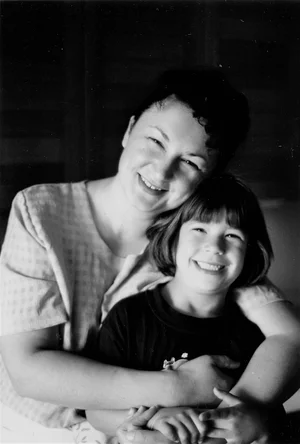
Daria Stepanova
In the winter of 2018, Daria Stepanova lost her mind. It wasn’t a gradual process, like the erosion of soil or the withering of plants. Rather, it happened suddenly, like a rush of wind over deep trees or a burst of lightning high in the blue summer air.
At first, she took the news of her daughter’s death with composure. The policeman who came to tell her they had found her daughter’s body deemed admirable. She let him usher her into the police car and drive her from the building where she worked to the one where she lived. On the way, the policeman asked her where she was from.
“The Balkans,” she responded, looking through the window.
“A mate of mine was there in the nineties, part of the UN corps.”
“Yes, there was a war,” she said, unmoving.
“Terrible thing, the war,” the policeman said and stopped the car in front of the three-story building she pointed to.
He watched her climb the stairs to the green-and-red door. The veined leaves of potted plants shivered against the railing as she climbed. The policeman turned the car around and drove away.
Daria Stepanova pushed the key into the square brass lock, turned the knob, opened the door, stepped over the threshold, and let the door shut behind her. She heard the latch click back into its slot and tossed her shoes off. In stockinged feet, she walked into a long room stretched between a kitchen at one end and a balcony at the other. She opened the ranch slider and stepped onto the balcony. A couple of late-blooming geraniums hung from their pots into the misty, hazy air. She watched the evening blue engulf, the sea and the hills above it. Lights from the ship marooned in the harbor flickered over the water.
“Look, there is a ship,” she said and walked back inside.
She picked up her bag from the floor, found her phone, touched the icon with the words “my daughter” on it, pressed the phone to her ear, and listened to it ring. Once. Twice. Three times. Again. When there was no answer, she typed, Love, please answer your phone, this is your mum calling, added two kisses, and pushed send. She then sat on the sofa and waited. When there was no response, she repeated the process.
In the morning, she discovered she couldn’t open her eyes properly or move her legs. She rummaged for her phone, patted her clothes, and slid her hands between the sofa’s cushions, but to no avail. She pushed herself off the sofa and made her way to the bathroom on her knees. It was an awkward position and it took her a long time to propel herself onto the seat. The first time she glanced at the mirror above the vanity she saw nothing. It took her a couple of attempts but then she smiled.
“I knew it!” she exclaimed, smiling. “It’s just like you to pull such a stunt on me. Making your old mum’s blood flow faster, like we joked when you were younger. But don’t do it again! Getting a bit too old for it. Anyway, what are you up to?”
But before she could hear her daughter’s answer, a loud knocking sounded from the hallway.
“Oh, dear me, who’s banging so early?” she said and smiled at her daughter’s face in the mirror. “Whoever it is, we’re not home. Just keep quiet,” she said winking.
When the knocking stopped, she waited for a few moments, then slid off the seat and kneeled her way back to the sofa.
“I can’t find my phone,” she said. “But it doesn’t matter. You’re here now. So tell me, what’s been going on?”
A couple of hours later, when her landlord opened the door to let her friend and another policeman in, Daria Stepanova was in the middle of listening to her daughter telling her about her last exams, her new boyfriend, and the plans for her birthday party. The sudden appearance of three people startled her, and she started crying. Predictably, all three interpreted her tears as a sign of distress, though her reasons were not what they assumed. She cried because their arrival caused her daughter to disappear, so she asked them to leave, politely at first, but when they didn’t move, she started shouting and tried to get up, which didn’t work but made her friend, a petite blonde woman, weep and the policeman, a burly man with a taser hanging on his belt, talk to someone on his phone.
When the ambulance arrived, it took three paramedics to hold her down and shove an injection into her arm. After that, she stopped shouting, spitting, and banging her fists. Then her body fell limp, and they carried her into their car on a stretcher.
Later, Daria opened her eyes to a soft glow of light seeping from the corridor, the humming of an apparatus above her bed, and muted voices. She realized she was in the hospital and looked around. The bed on her right was neatly made and thus unoccupied. The bed on her left was hidden behind the curtain. Daria Stepanova listened for breathing, snoring, farting, any sign of life, but there was none. She then wiggled her fingers and toes and found them responsive and unrestrained. Lastly, she looked at the window and smiled.
In the dimly lit pane, she could only just make out the contours of her daughter’s face. She gently swung her legs to the floor, grabbed the metal frame of the bed, and slowly made her way to the window.
“Oh, that’s good, that’s very good, and another step, just a little one, almost there,” she whispered as though encouraging an infant’s first steps.
When she stepped onto the ledge, swathes of her skin glowed in the moonlight like a white flag.