English! English!
An unlikely love affair…
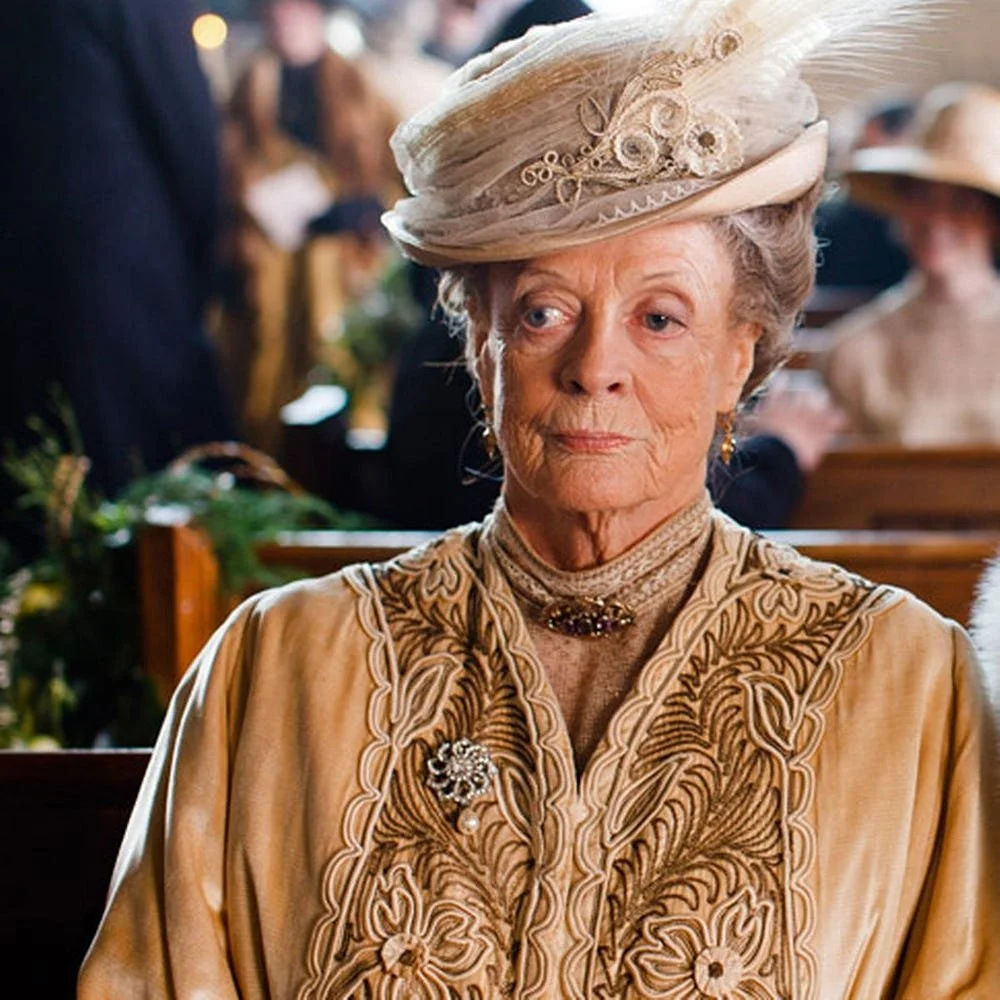
I love Maggie Smith.
No, make that I adore Maggie Smith! And for many reasons, including the way she says: There is the English language and there are the mistakes.
Indeed.
As odd as it may sound, coming from someone who had learned it as an adult and more from necessity than desire — I found myself in agreement with the fine Dame.
It is perhaps our difficult relationship that makes me love it so much. Humans value what makes them sweat blood and tears just as certainly as they discard with ease anything they acquired effortlessly.
So, yes — this is a story about an unlikely love affair.
But let us look at some facts first.
Today, an estimated 1.8 billion people across the globe can speak at least some English.
But that was not always the case.
Just a few centuries ago English speakers were almost exclusively dwellers of the British Isles and there were fewer than 7 million of them.
As the British Empire grew so did the reach of its language.
At one time, the British Empire encompassed almost a quarter of the world, bringing English to many colonies as a language of power, politics, and trade.
English became the language of the elite that provided access to education and advancements.
Sailors, soldiers, traders, and missionaries took English around the world, including to North America.
While English speakers were not the only people to settle in America, the founding fathers recognised the importance of English and reinforced its position as the language of the majority.
While, in time, English became more and more significant around the globe, it was not the first European language of colonisation. Even in the 19th century, it was far more common to communicate in French than in English.
More than the expansion of the British Empire, it was the growth of America and especially the country’s economic boom after World War II, that positioned English as the language of trade and finance, spreading American influence far and wide in the process. As all nations needed to trade with the States, the ability to speak English became a necessity.
Yes, you guessed it — Hollywood did it -:)!
Today, English is the most spoken language in the world and the third-most spoken native language in the world after Standardised Chinese and Spanish.
English is also the most widely learned second language and is the official or one of the official languages in 59 sovereign states.
At present, there are more people who have learned English as a second language than there are native speakers.
I am one of those who have learned English as a second language. As an almost 30 years old adult whose first language, being of Slavic origin, had nothing in common with English.
My courting of the English language, which eventually became a passionate, (and volatile), love affair, started, like all good love affairs — unpredictably.
Before I landed in one of the countries where it reigns, we had encountered each other only once, and even that briefly and under rather strained circumstances.
I was still a kid when a teacher with stiff black hair and the voice of a drill sergeant barked at my pronunciation of a few simple English words we were taught to memorise in the Introduction to English class, that it is hopeless, adding that I have absolutely no affinity for foreign languages. Frightened and embarrassed I promptly withdrew from the class and replaced it with a different one. That had nothing whatsoever to do with foreign languages.
Over two decades later, I found myself among native English speakers, none of whom spoke or had even heard my first language and my, (still ongoing) love affair with the English language began.
As I had neither choice, nor time, to ponder my predicament, or the opportunity to attend formal classes, I learned on the go. This is to say from neighbours who became friends, shopkeepers, workmates, Plunket nurses, doctors, tradespeople, television, including a soap opera I only later learned is one of the longest-running British soaps, (yes it was Coro Street and Jack and Vera were my favourite characters). In a word — just about anyone and anything I came across.
My efforts were often complimented and almost everyone was encouraging. I learned to guess the meaning of the words from the context, nod and smile to fill the gaps. I laughed at jokes about my pronunciation and reminded myself to remain patient while spelling my details for the umpteenth time on the same day or answering the ubiquitous question — where are you from?
It wasn’t long until I became sufficiently fluent to work in an office. My enthusiasm and work ethic compensated for the lack of language skills. It wasn’t for nothing that I agreed to work as an unpaid volunteer for a couple of months. To learn the ropes, they said, see how I fit in. I made it fit.
English soon became the only language my little girl and I used, in and out of the home. It was the only language spoken around us.
And so, English ruled in all its splendid glory of rules, structures, exceptions, and sugary politeness of ready-made small talk.
I do not know of another language capable of delivering the most cutting insult disguised as exquisite politeness.
Or one with layers crafted with the precision required to accurately reflect the class system its native speakers, if not exactly invented, most certainly perfected.
Yes, English showed all that to me, but not only that. As any fickle lover — it entices you to follow it, to open yourself to it, but only to show you how inadequate you still are.
The more I learned and the easier everyday life became, the more frustration I felt. No, this is not some attempt at a cheap joke — it really is the truth.
It is all very well to be patted on the back every time you pronounce or spell some big words, as a friend of mine used to call them, correctly, but something else entirely to communicate.
To say not what you can but what you want. What you feel bubbling inside you like a choked geyser.
The traps lurked inside small, everyday occasions — a joke you attempted that fell flat because your accent made it sound awkward instead of funny, a swear word that came out of your mouth sounding silly rather than angry, that moment you were in the middle of recounting an event with enthusiasm because it was important to you, until a well-meaning person stopped you to correct your pronunciation, a piece of writing you spent hours crafting and running through various grammar and spell checkers, but no sooner had you submitted it that a few mistakes sneered at you from unexpected corners. I could go on and on but there is no need. You got the picture.
In my case, it really is a chronic (possibly terminal) condition. Death by a language — I bet you’ve never heard of that before, have you?
You’d think I’d have given up by now, wouldn’t you? Surely any sensible person would.
For better or worse — being sensible has never been something used to describe me. Just doesn’t go with my constitution, I guess. I suspect it is genetic.
I remember, years ago, I told a friend of mine how, one day, I’d like to write. In English.
Write what? she asked.
You know, stories, poetry, maybe books.
You’re joking, aren’t you? She responded.
No, I said, I am not.
I see…well, good luck with that, she said.
I thought it was very kind of her to wish me luck.
Last year I attended a writing course at the end of which participants were required to submit completed manuscripts. Mine was 130,000 words long. The teacher in charge commented that it was the longest piece of writing anyone had ever produced in the nine months the course lasted, and then added, almost as an afterthought, that it was also the one with the most English language errors. At this level, she clarified, people are ordinarily familiar with the rules of the English language.
Well, that is the end of that I thought. At least I tried. No point banging one’s head against a brick wall.
I didn’t even feel frustration rising inside me. I felt nothing. Or so I thought.
Because yesterday changed that. In a bizarre five-minute (or less) event that unfolded at the outpatient reception of the hospital I attended for a scheduled appointment.
As I approached the glass partition, I saw the receptionist busily writing and speaking to someone on the phone, so I waited for her to finish and notice me when ready. I didn’t mind waiting, hospitals are often under-resourced and always busy. A couple of other people arrived and took their positions behind me. The receptionist finished her tasks and lifted her eyes towards me. I stretched my hi into a smile and recited the usual — my name and the reason I was there.
Where were you born? The receptionist asked. In a sharp, brittle voice that sounded almost angry.
My surprise was such that it confused me. But before I could give it another thought, the word Why fell out of my mouth and landed on the glass partition like a stain.
Because we need to know these things, she responded.
But you have it on your records already, I said. I have been coming for years. I am a citizen of this country. Have a passport. It is on my records.
The receptionist said nothing. She clicked the keys on the keyboard in front of her and told me to take a seat. The doctor will be with you shortly, she added. I felt my mouth becoming dry and took the closest chair.
The man who was behind me was now in front of the glass partition. He looked like he might be my age or a bit older. The sleeves of his Swanndri covered most of his hands. The receptionist looked at him but he didn’t wait for her to speak.
In a clear voice that was unmistakably born and bred in this country, he said: My name is James W…, I am here for an appointment and I was born in New Zealand.
The receptionist clicked the keyboard keys.
James turned towards the large sign hanging from the ceiling on the other end of the corridor.
I reached for the tissue in my pocket.
As I watched the back of James’ boots disappearing around the corner, I mouthed thank you.
Remembering what I always knew — the word creates what it names.
I took a notebook from my satchel and started writing.
In English.