Madame du Barry
Column — ‘From Nina with Love’
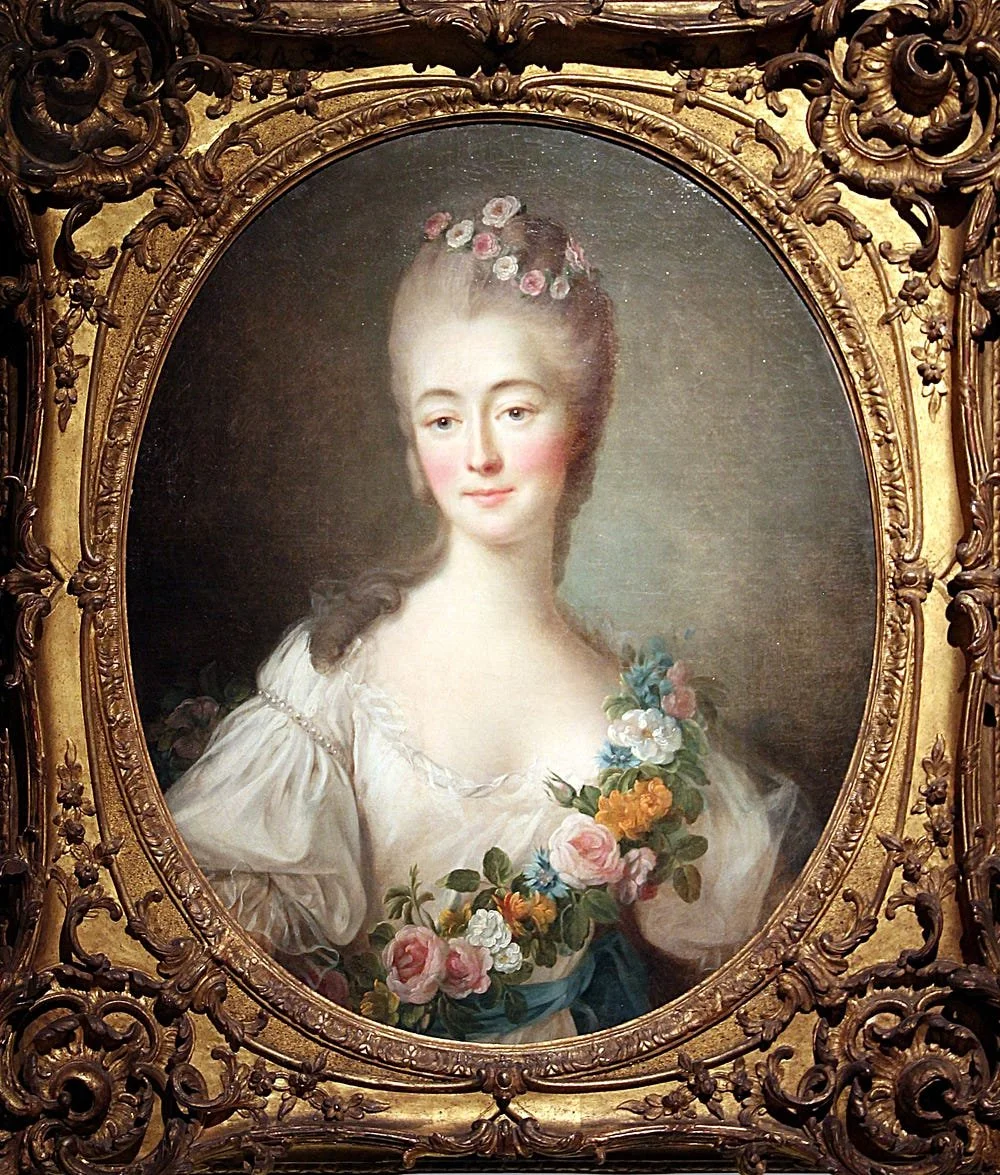
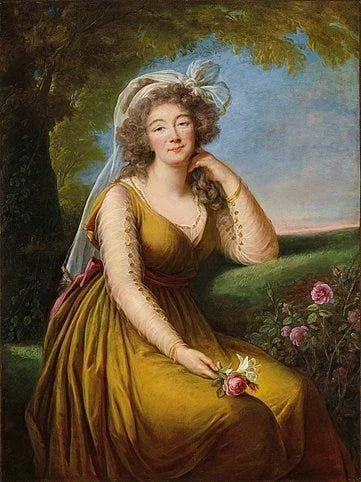
Though du Barry never wore rouge,
the artist felt bound to add it to her cheeks.
Oh, dear me! How time passes … I hardly noticed it has been over a week since I introduced my column.
Really, I should have written earlier, but we have been awfully busy here in Gentlemen’s Club. Everyone seems to be getting out of their minds about these new artificial intelligence things (AI tools they call them). They can, apparently, make a man fall in love with them.
Goodness me …, and this is a news somehow? If you lock the men inside four walls and the only window left open is the one on their computers screens — is there any wonder they will fall in love with just about anything that pays them some attention? Of course not. Especially since the same men have been trained for years already to pleasure themselves while watching so-called porn on the very same screens. Not to mention the cam-girls as they like to call themselves.
I was once so intrigued by the, allegedly, ever-growing phenomenon that I disguised myself as a man in order to see what all the fuss was about. A gazillion offers kept on popping on my screen, one more crude than the other. In the end, I chose a petite French girl that seemed a little bit more sophisticated than the others. At least she did not bombard me with images of her private parts to start with.
Still, as soon as I engaged her — the little (and not so little) reminders, disguised as cute little messages, start popping on my screen to make sure I kept on paying. How can anyone enjoy such liaisons is beyond me. Besides, as the live session started rolling, I realised that the promotional images showing a young, almost innocent-looking lady, hardly match the peroxide blond in a skimpy outfit attempting some sort of slow-motion striptease against the background of a dimly lit bedroom furnished as a cheap, last century brothel. I left before it became necessary to make some kind of passable excuse to not accept her offer of a private session. It occurred to me to ask if the entry into an alluringly named private session, costs extra — does it mean that our current session was not private, but I could not be bothered.
Anyway, there is the other reason I didn’t write earlier. We have a brand-new addition to our club. Her name is Jeanne and, incidentally, she too is French. Jeanne arrived on Friday afternoon with a suitcase full of silk negligees and a cut lip. She was born and raised in Provence, she told me and is on the run from a violent boyfriend.
A common story I have learned not to scrutinise too closely. Her voice didn’t carry any of the melodious, sing-song vowels that characterized Provençal’s accent and the boyfriend was more than likely a former pimp with the unfortunate affliction of experiencing his lust as violence.
But none of that was any of my business.
Over the years I have learned that, in time, girls start to feel safe again and, when ready, tell me the real story. Sadly, more often than not it includes some kind of premature and often violent introduction to intimacy that left them with self-loathing they channel into selling their bodies. I have spent a good part of my working life healing those wounds and restoring damaged self-esteems to enable them to see themselves for they are — self-made goddesses with power like no other.
Because, as I am sure you already know, nothing is as powerful as seduction. This is exactly why those whose business is to make their AI tools profitable, are tinkering with it. Good luck with that I say. I have never met a man who would trade the touch of a beautiful woman’s hand, the melody of her voice, and the scent of her skin, for a chatbot or a robot no matter how life-like it might be. Unless of course, they intend to fuse robots with men and produce a new kind of species, neither I nor you dear reader have ever encountered. At which point it would hardly matter.
But alas … True to my old habit, I digress, when what I meant to talk about is Jeanne who possesses every inch of what I like calling — a French factor. Including a somewhat obscure background. While I have a little doubt that she has ever even visited the Provence, let alone been born and raised there, I have no doubt that Jeanne is just as French as Courvoisier or Chanel. Most likely from one of Pari’s more opaque arrondissements; Jaurés or Mouzaia or even Montmartre or Belleville are my guesses.
In any case, watching the strands of her blonde curls catch the late afternoon light reminded me of another Jeanne whose portrait I visit every time I am in Paris. It never ceases to amaze me that the artists felt obliged to add rouge to her cheeks even though she never wore rouge in her life. Her beauty was such that any enhancement would only take from it rather than add to it.
Yes, I am talking about Jeanne Bécu, better known as Madame du Barry, the last maîtresse-en-titre of King Louis XV of France. The woman whose life had and continues to inspire works of art some 230 years after her death. And some people have audacity to think that ladies of our profession are no better than common harlots! Ignorance truly is one of the worst of human shortcomings.
I hear this year Cannes Festival was opened with a movie inspired by her life. I have not seen it yet, but undoubtedly will even though, as I understand, they have cast some American actor as Louis XV. Well, there isn’t really much more to be said about that.

The real Madame du Barry was born Jeanne Bécu on the 19th of August 1743 in Vaucouleurs, a commune in north-eastern France. Her mother was Anne Bécu a 30-year-old unmarried seamstress. While it remains unknown who Jeanne’s father was, some say it was Jean-Baptiste Gormand de Vaubernier, a friar known as frère Ange. One can only speculate about the passion that seduced a friar, don’t you think?
Not much is known about Jeanne’s childhood, but when she was around three years old, her mother made the acquaintance of a wealthy financier and a supplier to the Royal Army of France who lived in Paris. Anne and her young daughter moved to Paris and were placed in the household of the wealthy financier’s mistress named Francesca where Anne worked as a cook. Don’t you think the French have a particularly charming way of arranging familial affairs? There were even rumours that the wealthy Monsieur was Anne’s lover and Jeanne’s half-brother’s Claude father.
Be that as it may, Francesca apparently adored little Jeanne, spoiling her and lavishing attention and fine clothes on her. This would be the first chance she was given to understand she had a power to capture people’s attention. Francesca would show her off to visitors, dancing and entertaining them. Her mother was shut in the kitchen however, and the Monsieur’s visits become less and less as Francesca kept a sharp eye on him until, at last, Anne’s older sister suggested an ordinary solution — a marriage. The possible future husband was Nicolas Rançon, ten years Anne’s junior and pockmarked, but earning a good income. He was made more attractive when the Monsieur appointed him as a storekeeper to the army and the two were married when Jeanne was about six years old.
It was decided that she should be given an education and Francesca suggested a convent school for wayward girls run by the nuns of Saint Aurea. This was not a fashionable convent for the wealthy, as the girls were taught mainly domestic subjects and religious instruction. However, both music and drawing were also taught, and young Jeanne developed a love of drawing which would stay with her into adult life when she became a patron of arts. Jeanne remained at the convent until she was 15 years old.
As her step-father was away in Corsica, and Jeanne was deemed old enough to be independent, she was in need of an income to support herself and her mother, especially since they were no longer welcome at Francesca’s house. Some say they were evicted.
In any case, Jeanne’s family was all too aware of the dangers awaiting a pretty face in Paris, and a job was soon found to keep her busy. The same aunt that arranged her mother’s marriage, came to the rescue again with employment as a young hairdresser’s apprentice. By the end of 1758 Jeanne not only had a job she was perfect for, but the young hairdresser had fallen head over heels in love with her. While there was no mention of marriage, he was happy to welcome Jeanne into his luxurious apartment and shower her with money and gifts. That is until his mother found out and declared an end to the whole affair. The shrewd old lady was furious that her son had squandered his income on a working class slip of a girl, and put the end to the whole arrangment. Isn’t it terrible how any sense of fun diminishes with age?
Jeanne’s next employment was as a maid to an elderly widow, but it wasn’t long before the old lady was just as charmed with her pretty new maide as everyone else, and Jeanne became her companion (dame de compagnie). Society people who hadn’t visited much in recent years suddenly came more often and widow’s two sons visits also become frequent. Fairly soon the two men, unhappy in their marriages, found themselves equally infatuated with their mother’s companion. Jeanne was happy to receive their gifts and attentions when, once again, the elderly lady became unhappy with the situation, and the future Madame Dubarry was once more without work.
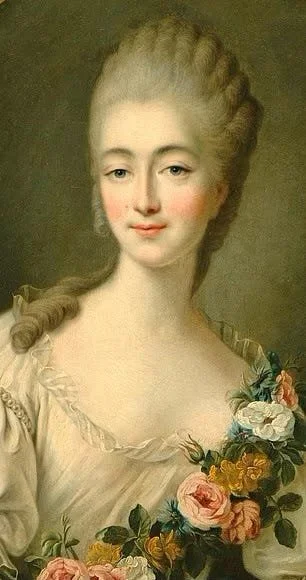
But Jeanne had made the acquaintance of many wealthy and admiring men, and it wasn’t long before she was once more employed in their midst, this time as a milliners assistant and grisette in one of the most exclusive fashion houses in Paris. She thrived in the shop as the centre of attention, accepting gifts from rich bankers, merchants and minor nobility alike, who fell for her slanting violet blue eyes and golden ringlets. However, she never accepted the offers to become mistress to one man, and become a good friend with Adélaïde Labille-Guiard, a shop-keeper’s daughter and a well-known artist.
It was in 1763, that the definitive moment that was to set the path for Madame du Barry occured. Jeanne, who was by now going by the surname Vaubernier, no doubt a nod to the rumours of her possible monk father, was invited, together with Adélaïde Labille-Guiard, to view the unveiling of a new equestrian statue of King Louis XV.
The statue was viewed somewhat mockingly as the once beloved king was becoming despised by his subjects thanks to the loss of Canada to Britain and constant wars on behalf of Empress Maria Theresa and the Austrian Alliance. Nevertheless, it was a grand spectacle to celebrate the unveiling with fireworks, mock battles on sand, and meat handed out to the poor. It was there Jeanne caught the eye of Jean-Baptiste du Barry, a minor noble from Toulouse. He was from an impoverished military family but had come to Paris after leaving his wife and baby son behind in his country Château, and had become so renewed for his card playing and women seducing skills that he was nicknamed Le râteau — The Rake.
While du Barry had made some lucrative deals with army contracts, his real income came from his ability to find and procure pretty young women, ranging from shop girls to little known actresses. In other words — du Barry was working as a pimp for the wealthy and well to do of Paris. He was quick to make acquaintance of Jeanne and install her in his household, calling her Mademoiselle Lange.
In the first few months, du Barry was so infatuated with his new young mistress that Jeanne entered the world of the courtesans showered with jewels and fine clothes. Her mother was dressed in silks and had her own servants, and her stepfather was given a lucrative promotion. But the spell was broken when du Barry’s 14-year-old son arrived in Paris. He was quieter than his father, but instantly liked by Jeanne who welcomed him warmly.
Du Barry wanted to gain a place at Versailles for his shy son, and he managed it through his friendship with a 70-year-old Duc de Richelieu who was disliked by many but loved by the king. In exchange for his son’s position, Jeanne was sold to the duke and given 1200 liver (about 20,000 pounds in today’s money) for her compliance. The old man protected her, and for her part Jeanne reman loyal to him his whole life. However, Mademoiselle Vaubernier, as she was now officially called, also reminded at du Barry’s side, appearing at his dinners and encouraging her admirers to lose their money in his gambling rooms.
In 1768, Jeanne visited Versailles dispatched to see the most powerful man in France at the time — the Duc de Choiseul. Her mission was to charm the powerful Duke as du Barry held the contracts to supply arms to Corsica but had handed the revenues to Jeanne when the duke became aware of the abuses of the contracts and was putting them to an end. Jeanne was instructed to plead that it was her only income, in hope the duke would be, as many others, bold over by her charms and agree. Alas — it didn’t work — the duke was unimpressed and sent Jeanne away.
On her way through the state apartments, providence (or so they say) stepped in. The popular Queen Marie Leczinska was dying, and a mass had been held for her every day which her husband, King Louis XV, was attending. As he was passing through the gallery of mirrors, he happened to look up from his melancholy grief and met the gaze of Jeanne’s blue eyes …, who dared to smile at him!
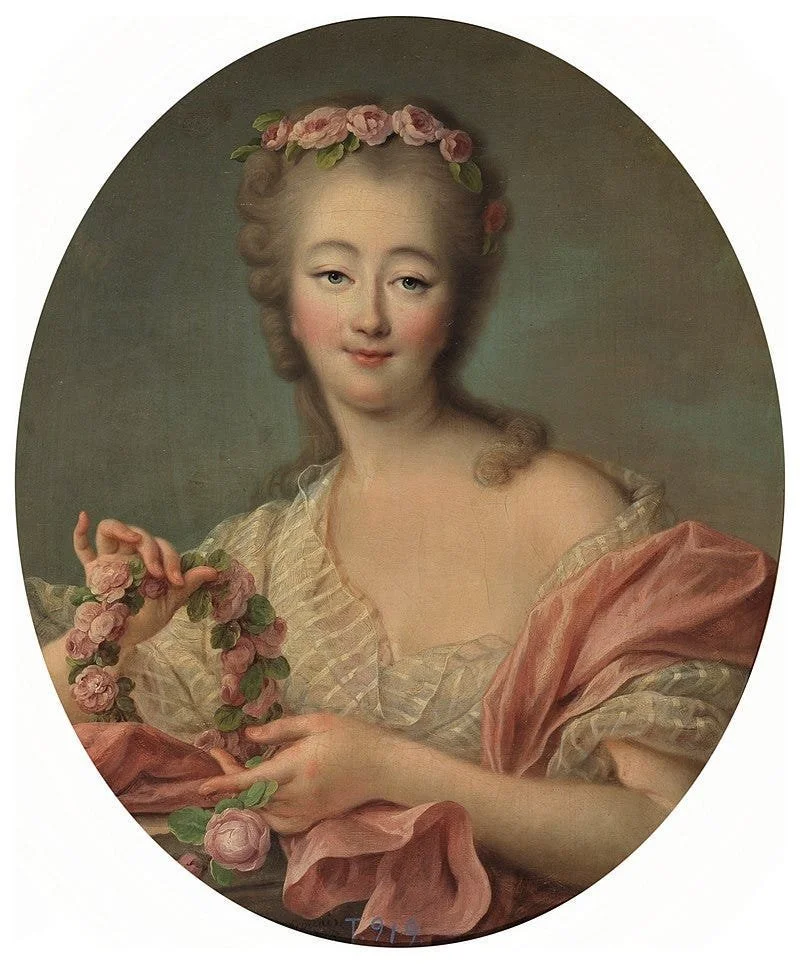
It wasn’t long before the king find out her identity with the help of his personal valet who was also his procurer. The story goes that upon Jeanne’s first meeting with the king, she performed the expected three curtsies then walked up and kissed him full on the lips. While unlikely to have happened, the story speaks of how besotted the king became with her. However, it transpired that no one told the king of Jeanne’s true origins, namely being not only a working courtesan but of low birth — at the time two of the most unfortunate circumstances any woman can find herself in. Instead, his valet passed Jeanne as a married woman who had a few liaisons at court, thinking, as it was customary at the time, that it would suffice for a passing fling and never anticipating how enamoured his King is going to become with Jeanne.
When, on the 24th of June 1768, Queen died, it was only Jeanne who was able to lift King’s spirits who had grown close to his Queen after the Madame Pompadour, his most famous mistress, became only his friend, (it might be what they called retirement back then). Without Madame Pompadour by his side and having several of his children died over the last decade, Louise was a man searching for something to make him feel happy once more.
The valet had no choice but to let the king know of Jeanne’s true origins. The history books tell us that, upon hearing it all, the king was furious with his valet and ordered him to at once arrange a marriage for his new lover that would supply her with the title necessary for the mistress of the king. Because my dearests, it wasn’t like today when former mistresses are first installed in court and then a necessary title bestowed upon them, no back then they still knew the proper order of things — to become a maîtresse-en-titre, the official mistress of the king, Jeanne needed to be both married and a member of the nobility. As you can tell, a former wife of a retired army officer would not have any chance at all. Nope. Not back then.
Anyhow, it was said that Jean-Baptiste du Barry would have married Jeanne at once, but alas he was already married and they, apparently, drew the line at polygamy (at least officially). But ever pragmatic, du Barry suggested his brother Guillaume du Barry. Guillaume was short, fat and liked drinking. But being invalided out of the army, he was unlikely to have other marriage prospects and so he was persuaded to become the husband of a woman whose bed he would never share by a large sum of money from his brother and contrivance of the Duc de Richelieu. On the 1st of September of that year, the wedding took place with the aid of a bride’s false birth certificate that made Jeanne of noble descend and three years younger. Oh, the French — they have long figured out that desires know no boundaries!
And so, Jeanne was installed above the king’s chambers but led a lonely life due to the protocol of the French court. Louis was unable to be seen in public with her as she had not yet been presented at court. Despite attempts to button down her past, the court was full of whispers about the girl who had been plucked from the streets and installed as the king’s mistress. None of the noble women dared to put themselves forward as her patron revolted that a commoner should dare to converse with them and aspire to their position.
The king demanded a patron be found, and again with the Duc de Richelieu’s help, Madame De Ben was put forward. She was encouraged to take the position by having her huge gambling debts paid off. It took three attempts before the presentation was successful, however. The first time Madame de Ben grew nervous and feigned a sprained ankle. On the second occasion, Louis was hurt by falling from a horse and breaking his arm.
At last, on the 22nd of April 1769, Jeanne was presented at the court at Versailles as Madame du Barry. She wore silver white gowns threaded with gold, bedecked with jewels, sent the night before from the king and her coiffure, was so spectacular it was the cause of her being late. She now also had a companion — her sister-in-law, Claire Francoise. Jean Baptiste had arranged for his sister to join Jeanne, as his sister was not renowned for her looks or dowry but was witty and clever and the two women aided one another in the protocols and rituals of the new world Madame du Barry found herself in.

Madame du Barry soon settled into her new life, finally enjoying the endless luxury she had always craved. Louis the XV gave her a young Bengali slave named Zamor. Madame de Barry took a liking to Zamor and provided him with elegant clothes and an education. She was brought hot chocolate in bed every morning, dressed in fine gowns and jewellery, and had her hair done by professional hairdressers. She would then receive visiting artists and jewellers who hoped that she would buy something of their splendid offerings. She was extravagant, but good natured.
Jeanne had always loved art, since her days drawing in the convent and now she used her new riches to become a patron to many artists. She even made some new friends at court with the aid of the king inviting noble ladies who were old friends to an intimate dinner one night and Jeanne soon become close to one or two of the fine ladies.
Despite her hedonism and love of luxary, Madama du Barry had kind heart.
When the old Comte and Comtesse de Lousene were forcibly evicted from their château for heavy debts, they were sentenced to death because the comtesse had shot dead a bailiff and a police officer while resisting. When Madame de Béarn told Jeanne of their situation, she begged the king to pardon them, refusing to rise from her knees until he agreed. Louis XV was, they said, deeply moved: “Madame, I am delighted that the first favour you should ask of me should be an act of mercy!” I think best not to dwell too much on the question of whether pardoning in-debted gamblers handy with the gun is acceptable.
Another time, Jeanne was visited by a Monsieur Mandeville who asked a pardon for a young girl condemned to the gallows for infanticide after concealing the birth of a stillborn child. Jeanne’s letter to the Chancellor of France saved the girl. I think we can all agree that was a worthy cause.
As the king’s maîtresse déclarée, Jeanne was the centre of all eyes at court. She wore costly, extravagant gowns and diamonds covered her neck and ears, straining the treasury even more than it was strained already. She made both friends and enemies. Her most bitter rival was Béatrix, Duchesse de Gramont, who had in vain tried her best to acquire the place of the king’s previous mistress. Since Jeanne’s arrival, Béatrix had plotted with her brother for her removal. Both Béatrix and her brother went so far as to anonymously finance gutter pamphlets slandering both Jeanne and Louis XV.
But Madame du Barry’s power at court grew, especially since she exposed Duc de Choiseul’s plot to side with Spain against Britain for possession of the Falkland Islands. When the du Berries found out, Jean brought this plot to Louise’s attention and de Choiseul was dismissed from his position on Christmas Eve 1771. It was proof that a young girl of common blood with no head for politics could still be a dangerous adversary if she had the king’s ear.

Despite the intrigue, Jeanne, unlike her predecessor Madame de Pompadour, had little interest in politics, reserving her passion for new gowns and jewellery. However, the king went so far as to let her participate in state councils. An anecdote recounts that the king said to the Duc de Noailles that Madame du Barry introduced him to new pleasures; “Sire” — answered the duke — “that’s because your Majesty has never been in a brothel.” What a poor, poor taste Duc de Noailles! And even worse turn of phrase… I mean really.
Nevertheless, despite her kind nature and patronage of the arts, Jeanne was unpopular with the people due to her extravagant spending. Even though the king gave her a huge monthly income, she was still often in debt and there were still those at court who ignored her, most notably Marie Antoinette. After complaining of this to the king, the king advised the Austrian ambassador, who in turn spoke with Marie Antoinette and asked her to speak with Madame du Barry. Eventually, on New Year’s Day 1772, the Dauphiné stood near Madame du Barry and casually said — “There are many people at Versailles today,” giving her the option to respond or not. It was enough to soften the atmosphere.
Isn’t it amazing what the kings and ambassadors occupied themselves with in those days? Can you imagine a woman, any woman being so important to any head of state today to speak on her behalf to an ambassador? No, of course not… Oh, and don’t bother with any of the usual PC crap. The simple truth is that the mighty king of the, at the time, one of the most powerful countries deemed the happiness of his beloved mistress so important to speak to the other country’s official representative. Was that what was once called gallantry? Anyway…
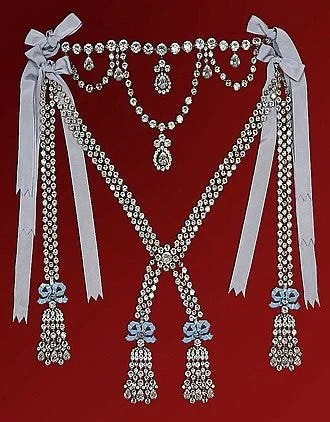
One of the more famous examples of unbridled lust for luxury happened in 1772, when the infatuated Louis XV requested that Parisian jewellers Boehmer and Bassenge create a necklace for Jeanne of unprecedented extravagance, at an estimated cost of two million livres. The necklace, still unfinished and unpaid when Louis XV died, would eventually trigger a scandal involving Jeanne de la Motte-Valois, in which Queen Marie Antoinette was accused of bribing Cardinal de Rohan to purchase it for her, accusations which would figure prominently in the onset of the French Revolution. Well, Dauphiné — greed and jealousy were always the ugliest of traits.
It must be acknowledged that most of the ways in which Madame du Barry was treated and the later portrayal of her character were based either on snobbery from above or jealousy from below. She had put herself in a place few would feel comfortable in — a common girl in the position of a noble woman in 18th century France. But although Madame du Barry had some happy years by the king’s side, they were not to last.
In 1774, Louis XV grew ill and took to his sick bed. His three daughters stayed by his side in the daytime and Jeanne by night time. Louis grew weaker. When efforts to revive him did not work, the doctors had to admit to their king that he had contracted smallpox. Jeanne bravely decided to stay by his side. This was no small matter for a woman whose entire livelihood depended on the beauty of her face, risking a disease which, if she survived, could scar her permanently. But on the 4th of May, Louise suggested to Madame du Barry that she had to leave his side, both to keep herself safe and to allow him to prepare for the last rites. She was relieved of her duties and placed under the protection of the Duc to Aggie who offered to take her to his estate.
Jeanne left the room calmly but fainted once outside and had to be carried to her apartments, where she spent the night in tears. In the morning she left in a hired carriage so not to arouse the crowds outside. The king later asked for her and, upon hearing that she had already left, said — “What already?” and tears fell down his face. Whatever the courtiers of Versailles may have thought, I am sure there was a deep affection between the pair. King Louis XV died on the 10th of May.
Following the death of the king and his grandson’s ascension to the throne as Louis XVI, the new Queen Marie Antoinette had Jeanne exiled to the Abbey du Pont-aux-Dames near Meaux-en-Brie. Yes, the convent again. At first she was intensely disliked by the nuns who knew in their mist was a mistress of the king who had little regard for their religious way of life. But it wasn’t long before Jeanne’s charm and good nature warmed them to her, and she soon settled in as she had at all new turns of her life.
After a year of living at the convent, she was granted allowance to visit the surrounding countryside, but to be back by evening. Just a month later she was allowed to go further, but not to travel more than 10 miles towards Versailles. Finally, after two years, she was allowed to return to her beloved Château de Louveciennes that was given to her by Louise XV and was close to Versailles.
She lived there for many years, having a few liaisons with new lovers such as Louis Hercule Timoléon de Cossé-Brissac, who later suffered greatly during the French Revolution. At one stage Jeanne made, what can only be deemed an error of judgment (perhaps due to loneliness) and fell in love with an Englishmen — Henry Seymour of Redland, whom she met when he and his family moved into the neighbourhood of her Château. Being English, Seymour became fed up with his secret love affair and sent a painting to Jeanne with the words ‘leave me alone’ written in English at the bottom, which the painter Lemoyne copied in 1796. Fortunately, Duc de Brissac proved the more faithful in this ménage-a-trois, having kept Jeanne in his heart despite Seymour.
Tragically, at the hight of the French Revolution, Brissac was captured while visiting Paris, and lynched by the mob. Late that night, Jeanne heard a drunken crowd approaching the Château, and through the opened window where she looked came a blood-stained cloth with Brissac’s head, at which sight she fainted.
Madame du Barry’s involvement with the French Revolution began with her slave, Zamor. In 1792, she discovered he had joined the Jacobin Club, an important political club for the revolutionaries. Jean was horrified and immediately demanded he hand in his notice and leave her service. It was a bad move. Zamor did as she asked and then went and denounced his mistress to the Committee of Public Safety. Based on his testimony, Madame du Barry was suspected of funding emigres who were fleeing the revolution, but she wasn’t arrested immediately.
She continued to live at her Château much as she had before — taking perfumed baths and having her hair done every morning. But less and less of her friends were around, some in exile, others in hiding. A nobles who had once rejected her were now glad to be invited to her dinner parties.
But things took a darker turn in 1793 when the Revolutionary Tribunal of Paris accused her of treason, and she was condemned to death. In an attempt to save her life, Madame du Barry gave details of jewels she had hidden in England. At the start of the Revolution, she had been robbed but the jewels were found in England along with the thieves. Rather than bring them back to France with her, Madame du Barry travelled to London to identify her gems, but left them behind on her return. Unfortunately, it was these travels between England and France that left doubt on her statement that she was not working with English spies. The confession did nothing to change her faith but her jewels would later be taken and sold after her death for which she waited more than two months in prison. It is now known that Madam du Barry never smuggled any French nobility to England.
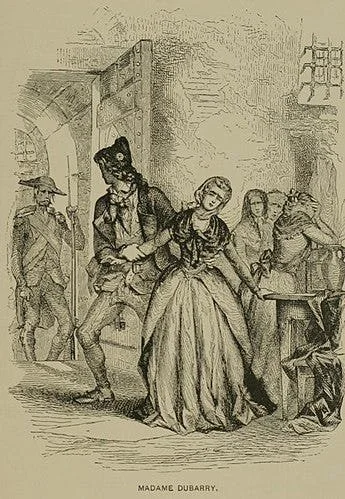
But on the cold 8th of December 1793, Madame du Barry was beheaded by the guillotine on the Place de la Révolution. On the way to the guillotine, she collapsed in the tumbrel and cried, “You are going to hurt me! Why?!” Terrified, she screamed for mercy and begged the watching crowd for help. Her last words to the executioner are said to have been: “De grâce, monsieur le bourreau, encore un petit moment!” — “One more moment, Mr. Executioner, I beg you!” To no avail.
She was buried in the Madeleine Cemetery with many other victims including Louis XVI and Marie Antoinette.
While her French estate went to the Tribunal de Paris, the jewels she had smuggled out of France to England were sold at an auction at Christie’s in London, in 1795. Colonel Johann Keglevich took part in the Battle of Mainz with Hessian mercenaries paid by the British with money from this sale.
Oh, my dear, dear Jeanne… Have you forgotten that they never give another moment to girls like us?
Some still talk about you as a scandalous harlot, conveniently ignoring your kindness and generosity. Even more conveniently they pretend not to know that the so-called harlots could only exist if supported by their customers.
You know, despite all the rhetorics, the times haven’t really changed that much. Girls just as young as you were, or even younger, and just as poor, are still being sold, day in and day out. Only now there are no dukes, jewellery, silks or kind-hearted nobility however minor.
The nobility, gallantry and decent manners are out of fashion all together.
Nevertheless, the same poor girls are shipped from one side to the world to the other, hoping they will earn enough to help their families, just like you did, along with everyone else you discovered was in need.
A few knew (or admit) that the most scandalous harlot of Versailles, as they named you, was also a kind and generous woman who supported her mother and stepfather till the end and brought joy to an aging man.
Your only crime was that you wished a better life for yourself, and your family and you went about it in the only way available to you as a poor, common girl in the 18th century France. And you did it Jeanne! You succeeded splendidly despite (or perhaps because) of all the spite, intrigue, hypocrisy and jealousy that followed you until your last breath.
Before I go, I just have to tell you something funny — they named many dishes after you, like Soup du Barry and many others. They all have a creamy white sauce, and many have cauliflower, apparently, allusion to your powdered wigs with curls like cauliflower florets — just imagine! The world is still a silly place my dear Jeanne… On ne peut que rire!
With Love From
Nina -:)!