The Market
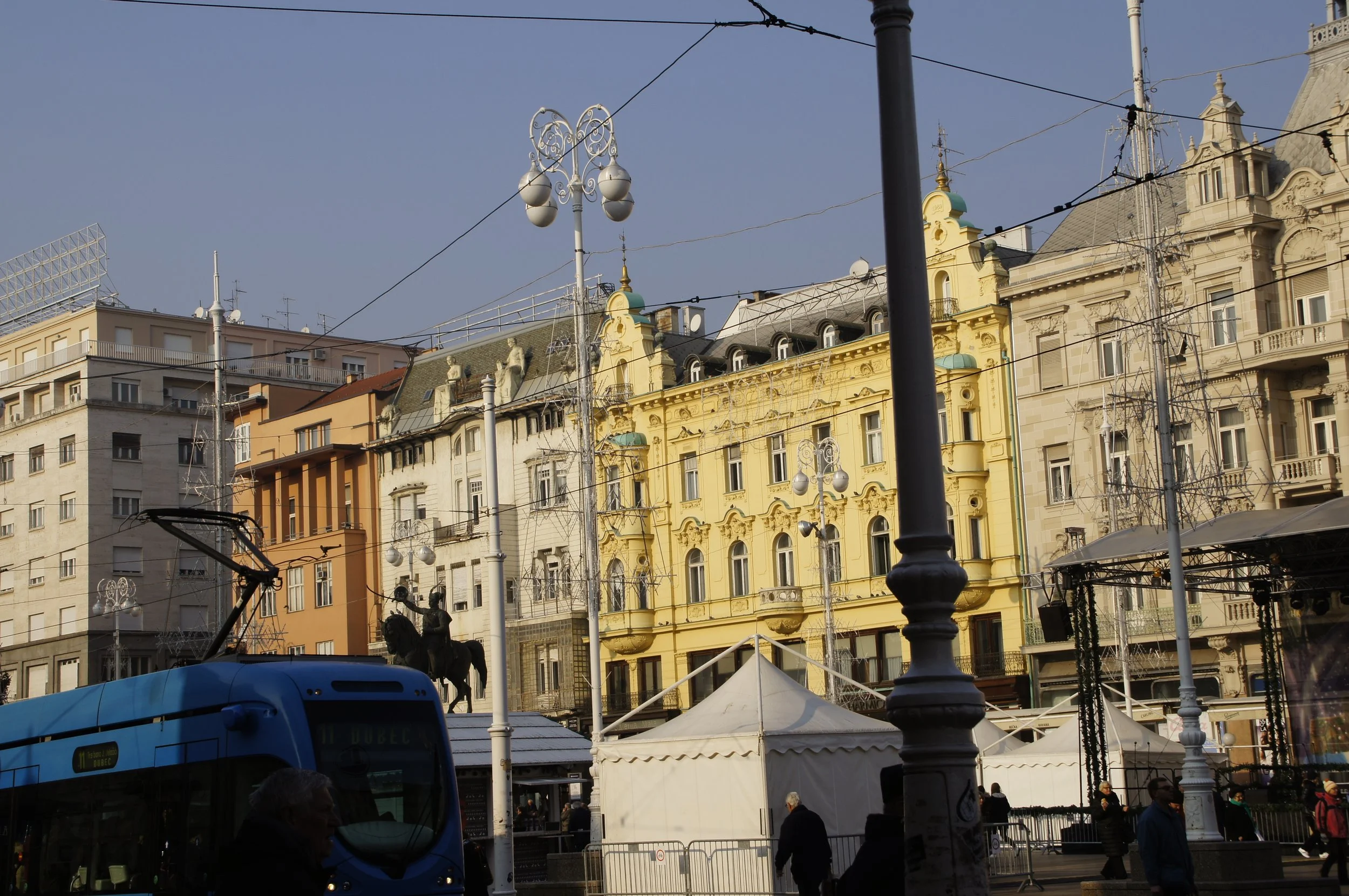
I can still see it.
A square with its stern-looking sculpture — the bronze horseman, clad in long-forgotten military regalia, his sword raised permanently at the distance.
A city with its cobbled streets, sleepy blue carriages of its old-fashioned electric trams, ornate facades, and its tired commuters.
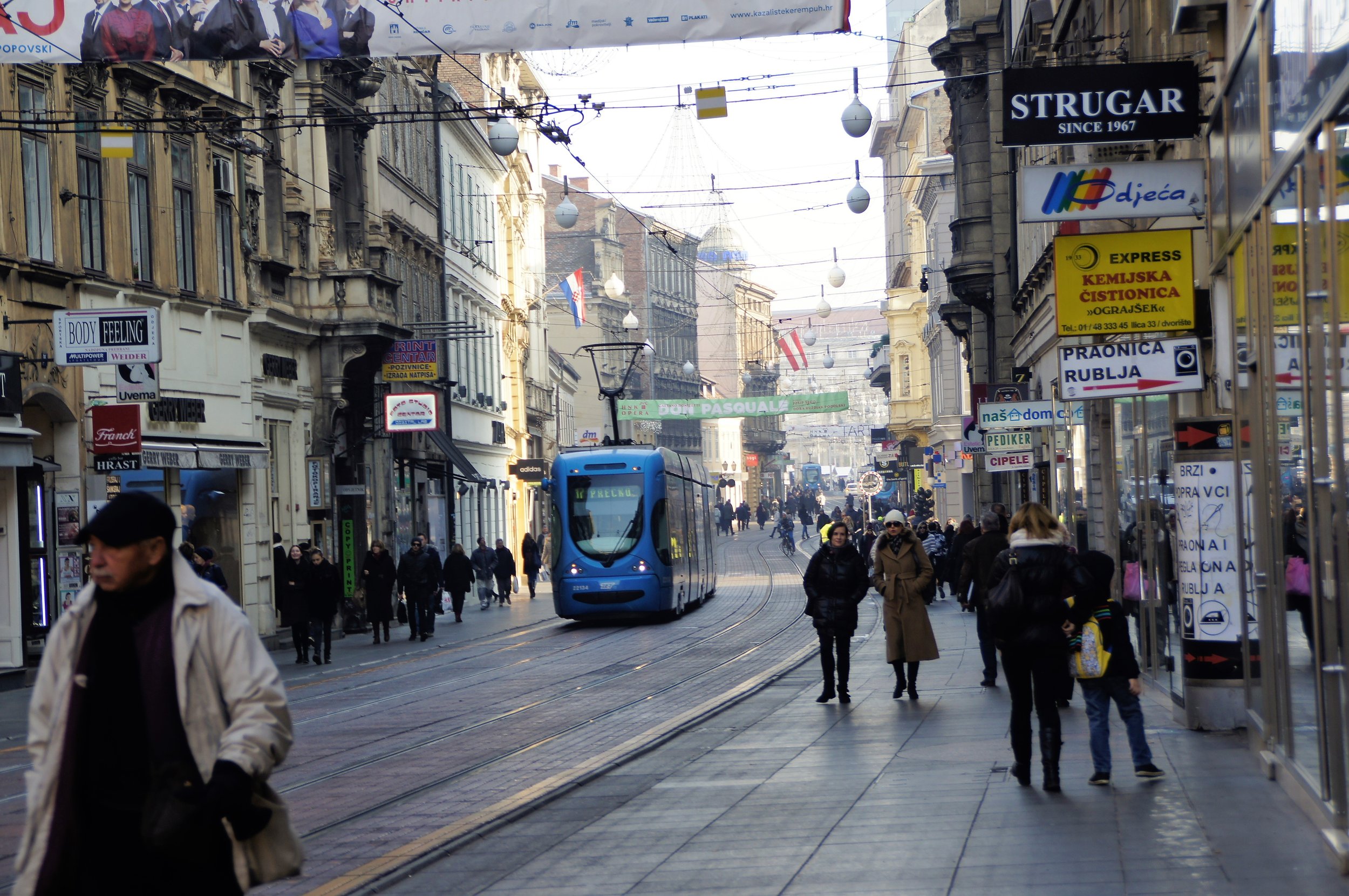
The early autumn’s mild evenings rolling slowly through flocks of girls, giggling incessantly, checking out each other’s attire.
Their glances dancing over the golden leaves that swirl above the red-tiled roofs.
Later, when the autumn air crisps with cold and the first snowflakes land on the swordsman’s shoulders, the street sellers offer roasted chestnuts wrapped in an old newspaper.
I remember clasping my hands over the warmth of the newspaper and inhaling the smoky scent of chestnuts.
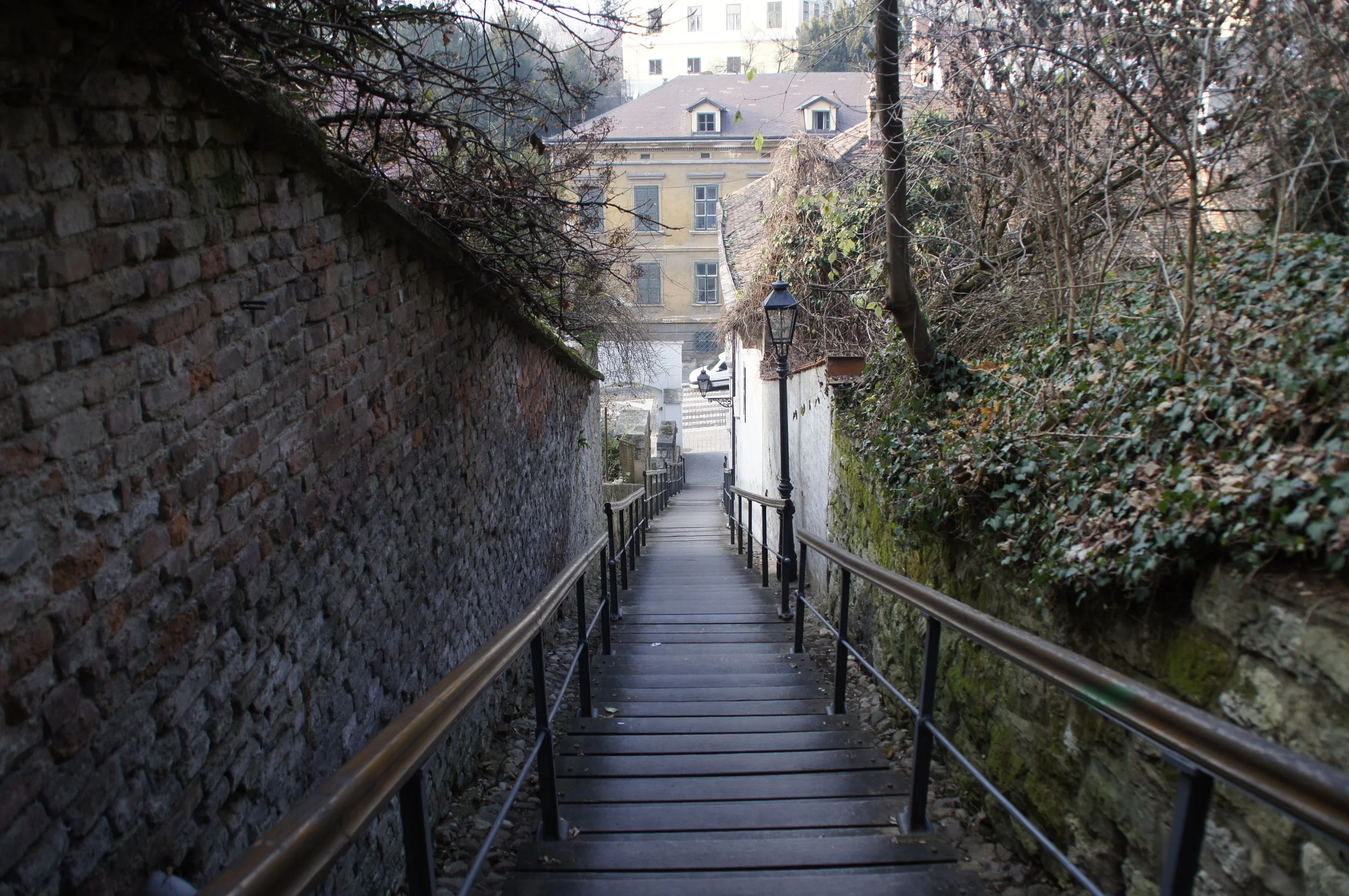
Behind the bronze horseman, along the square’s curve, stairs rise upwards, towards the city’s medieval heart. Next to the stairs, a small cable gondola awaits its passengers.
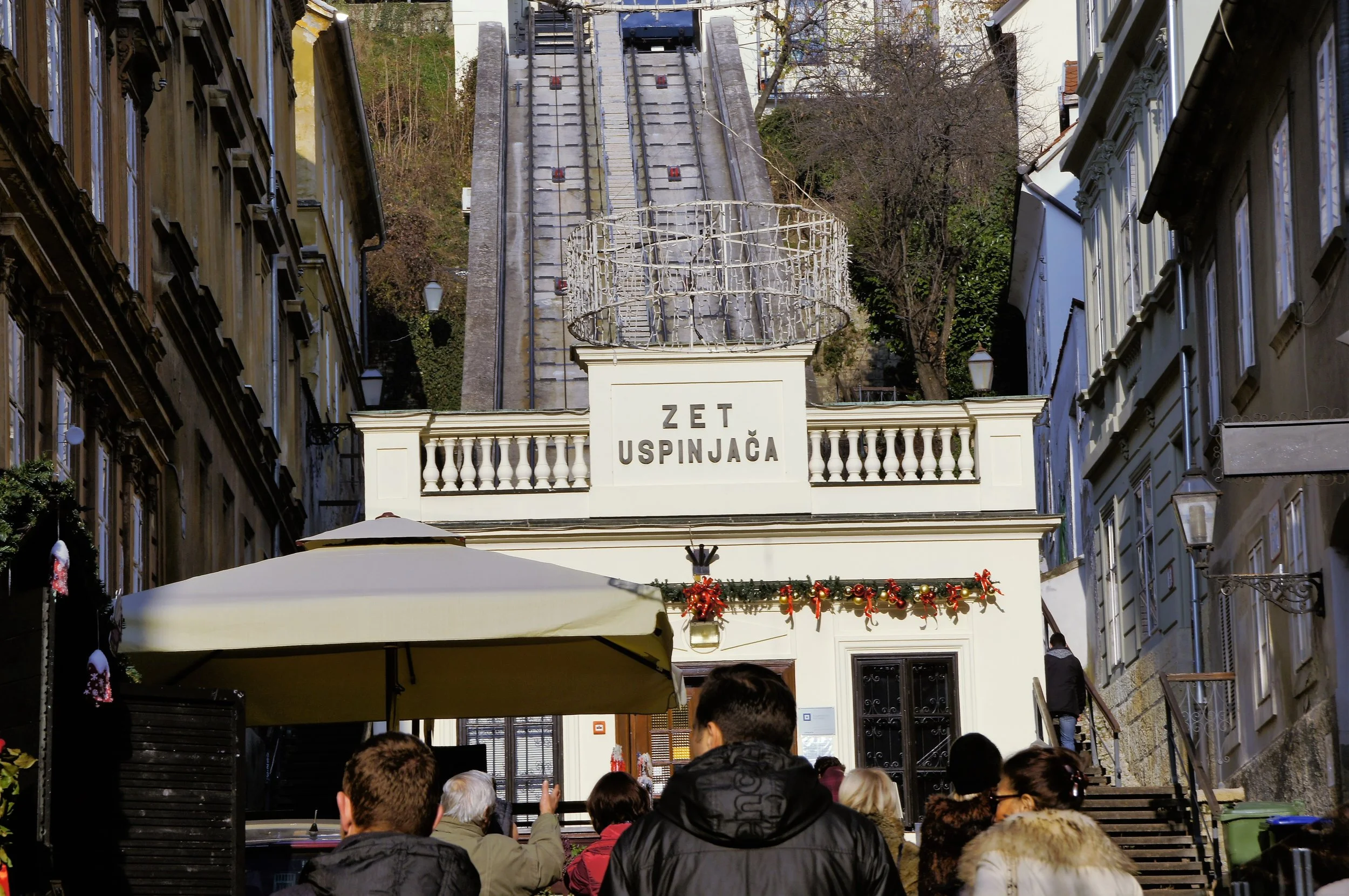
On the days the rains washed the air clean, I would board one of the gondola’s wobbly carriages and choose a seat next to its windows.
The view stretched across the city, over the tall windows of its Austro-Hungarian houses, fancy and layered like Esterházy Torte, over its recently built high-rises, all the way to the river that cuts the city in half.
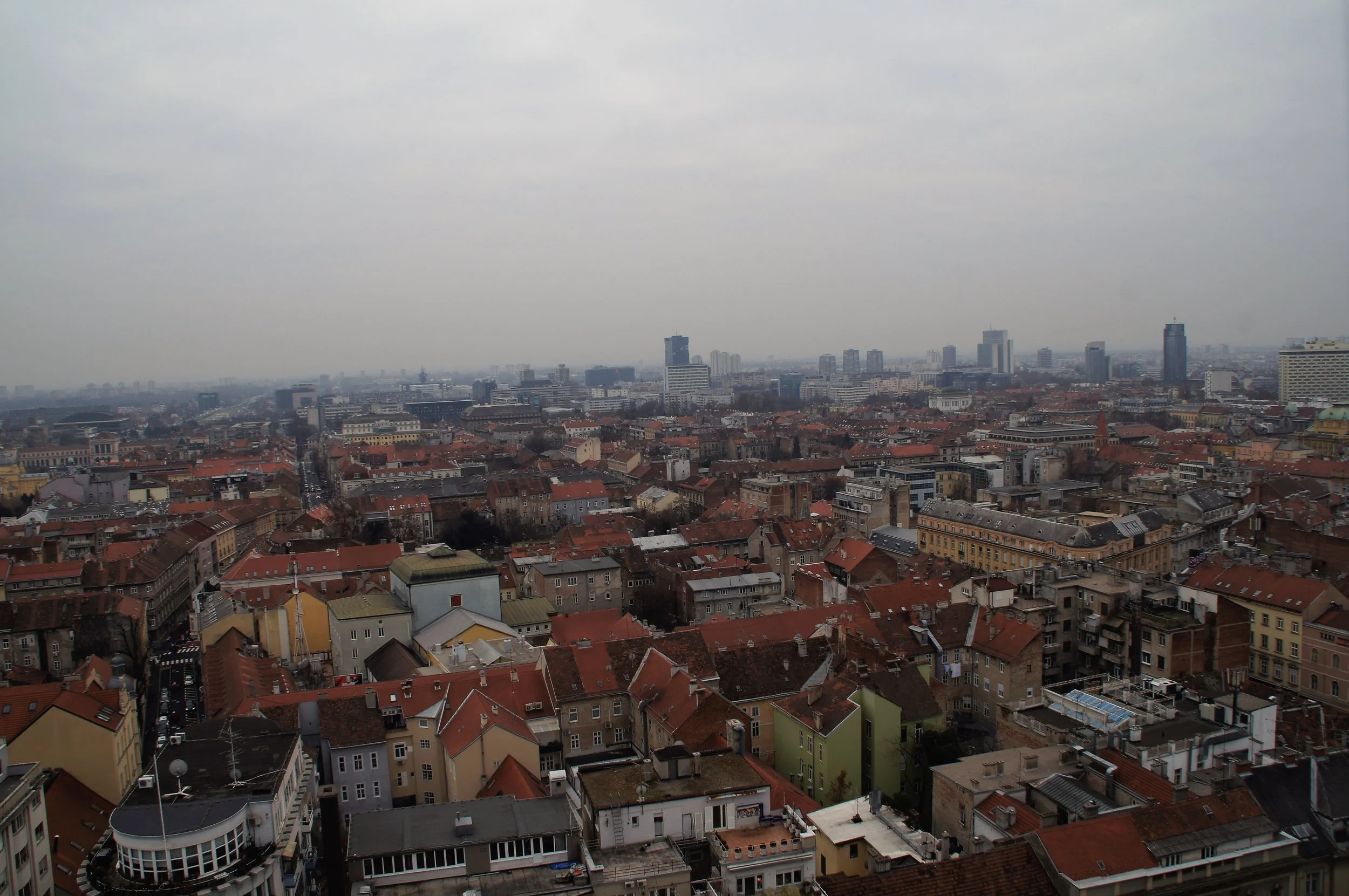
The new settlements glue themselves to the city from the river’s side. Variously shaped dwellings scattered haphazardly amongst them.
Climbing the stairs would leave me slightly breathless from the fragrances and aromas of the city’s market that bursts open at the top of the stairs, like a suddenly dropped watermelon.
The town’s belly lay wide open under the hundreds of red umbrellas and parasols. Its stalls bending under the heaviness of sweet, honey-coloured grapes next to rich, ripe tomatoes, pale green and purple cabbages, crimson peppers.
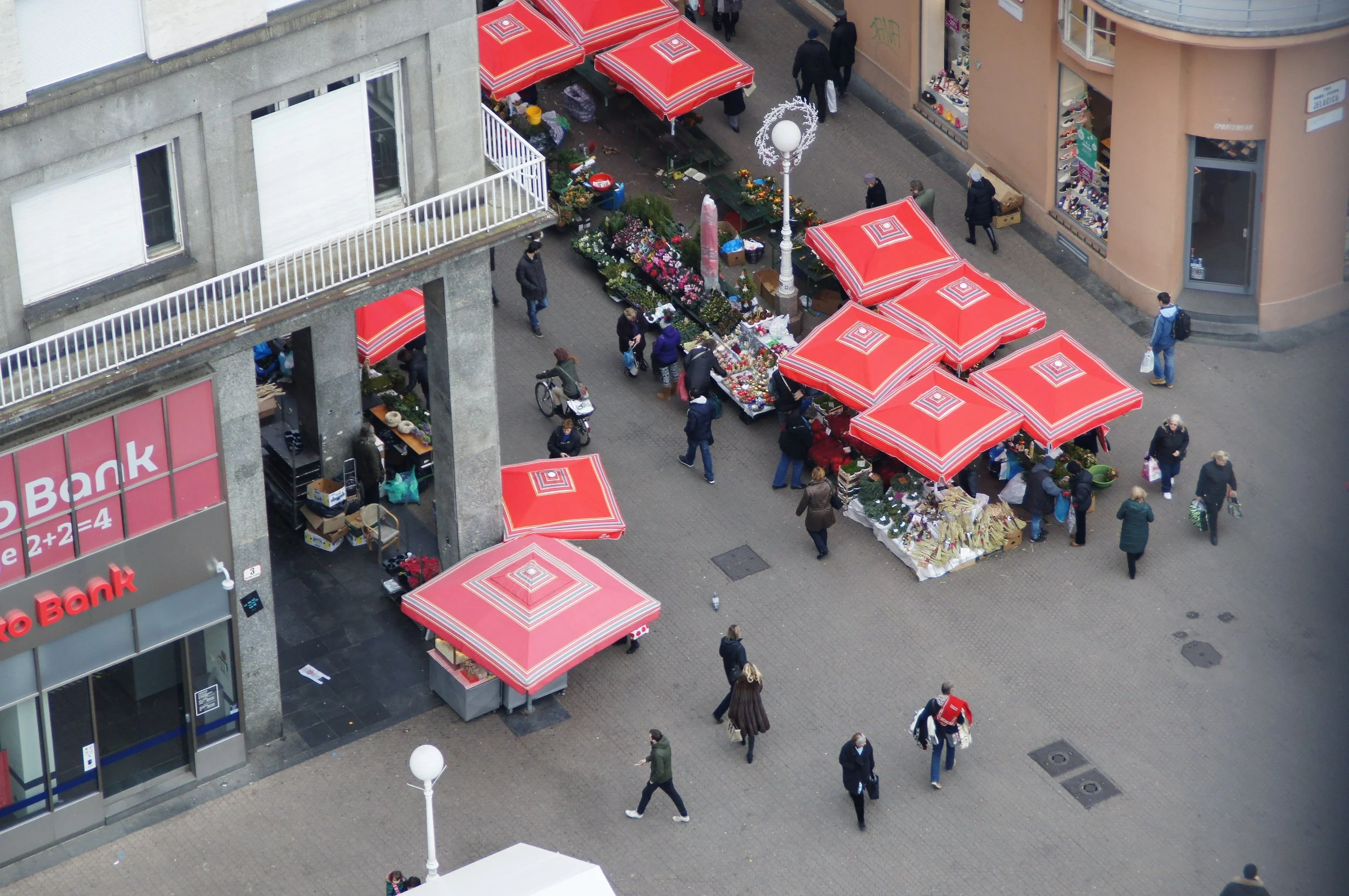
The first row of stalls belongs to cheese sellers.
They wear white protective sleeves over their working garments and sometimes caps with short rims that hang on the back of their heads.
Their stalls are covered with white or yellow cloths on which cheeses are carefully arranged, on plates, or still in their original molds.
There is a white cottage cheese wobbling like a jelly perched on top of a blue ceramic plate.
A young woman with rose-coloured cheeks offers me a broad smile and a small slice of cheese to taste. I smile back.
The next stall exhibits a row of round cheeses in various shades of brown, from pale gold to deep, warm chocolate.
A slice is missing from one, leaving its dusty texture exposed through the crack. Those are hard, aged cheeses sold by a man with serious, deeply set eyes.
The next set of stalls carries baskets loaded with crisp-looking vegetables; the milky heart of a cauliflower next to the deep green leaves of silverbeet still glistening with dew, and dry wild mushrooms soaking the air with the sharp scent of woods.
Moving slowly amongst the stalls feels like swimming in the fragrant sea of colours and sounds.
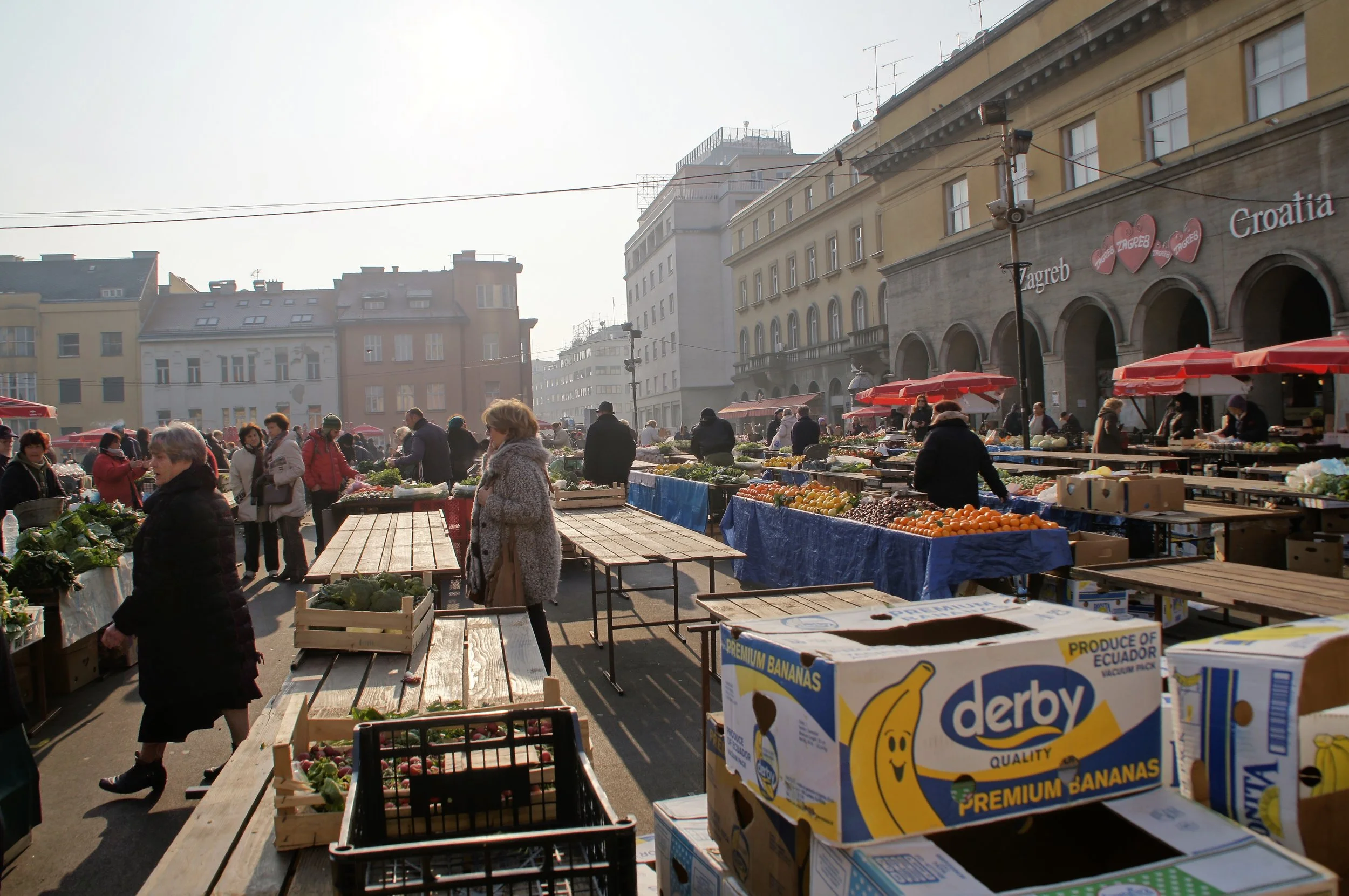
The stall owners praise their offerings loudly and negotiate prices with their customers in high-pitched voices.
The passers-by chatter and chuckle while small children play tag under the stalls, amongst the large straw baskets.
The fresh fish are arranged between sheets of ice with their cold, still eyes and glossy bodies.
The seller cuts the shiny body open and cleans the fish’s insides in one skilful move of the knife.
After splashing it with cold water, the cavity opens pale pink and empty.
A woman with long hair and a sizable bosom places the fish, wrapped in a clean sheet of white paper, in her shopping bag next to a bunch of celery and blood-red carnations.
After the fish stalls, the narrow, cobbled path turns left towards the taverns with carved wooden doors just a few steps below the street.
They serve grilled minced meat fingers inside hot bread in the shape of a half-moon.
In summer, when the air shimmers with heat and the wooden doors are left wide open, the sounds of male voices rush over the cobbles.
After the day’s work, they stand together in small circles drinking from plain glass jugs, moving their large hands with the rhythm of speech.
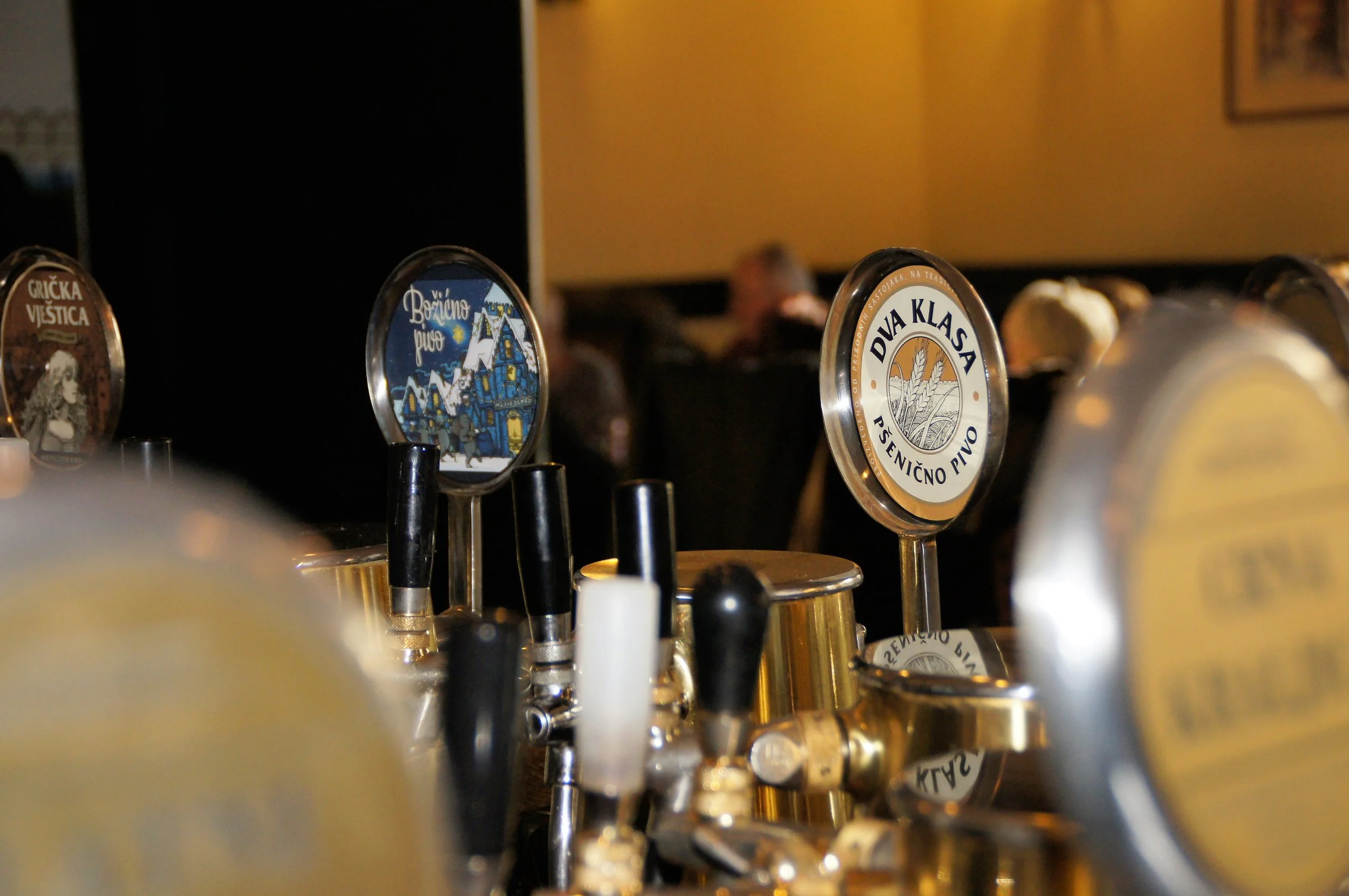
Passing by, I often wondered how it would feel to bury my face into those broad chests and inhale the odour of a male.
There are only a few red umbrellas left after the taverns.
I am looking for a small stall just before the end of the market where painted gingerbread hearts are offered for sale.
They are spread in neat order across a clean tablecloth. Some are hanging from the wire stretched from one end of the stall to the other.
They are painted deep red with white and yellow sugary ornaments adorning the edges.
Sometimes they are more luxurious with small mirror placed in their centre or a special message written in white sugar and carefully wrapped in transparent shiny paper tied with a bow.
If you have a sweetheart, he might give you a painted gingerbread heart after church on Sunday.
In the gunmetal coloured year, I tucked a red gingerbread heart between the skirts and blouses in my suitcase before leaving the city with the market under the red umbrellas.